
On the occasion of World Health Day and as part of the French G7 presidency, the first One Health Summit brought together heads of state and ministers from around the world, representatives of international, regional and local organizations, scientists, and stakeholders from the private sector, civil society and youth, in order to accelerate the implementation of the “One Health” approach. The One Health-Emerging Infectious Diseases Graduate School (1H-EID) took part in this event, helping to represent the expertise and commitment of Université Paris Cité in support of this approach, in resonance with our university’s “Planetary Health” signature.

© Design graphique Delcom 1 / Mesre – Illustration Garry Killian / Freepik
The “One Health” concept is based on the recognition of the interdependence of human, animal and environmental health, which requires coordinated approaches to prevention and scientific data sharing, as well as active international cooperation to address common health and environmental challenges.
Isabelle Martin-Verstraete, Associate Professor and coordinator of the One Health-Emerging Infectious Diseases Graduate School, was invited to this international event, where she was able to exchange with scientists as well as with the coordinator of the EID@Lyon Graduate School.
The first day of the One Health Summit was dedicated to scientific exchanges around recommendations drawn from prior work by international experts. Discussions were structured around four round tables addressing major issues: emerging infectious diseases including zoonotic reservoirs and vectors, antimicrobial resistance, exposure to chemical and plastic pollution, and sustainable food systems. On the second day, the summit took on a more political dimension, bringing together heads of state and ministers alongside international agencies (WHO, WOAH, FAO, UNEP), the European Union’s Directorate-General for Health, the World Bank, and major private sector and civil society players.
The One Health Summit sought to translate political commitment into concrete, multi-sectoral actions on prevention and preparedness around the four chosen themes, in order to contribute to the development of more resilient and equitable health systems for humans, animals and the planet. The summit highlighted the importance of science, research and innovation, action-oriented multilateralism, and the participation of civil society, local authorities and youth.
To learn more and discover the actions included in these commitments, access the One Health Summit report.
The Graduate School 1H-EID committed to the One Health Festival
On the occasion of this summit, a call for proposals was launched to highlight One Health initiatives, both in France and internationally, as part of a One Health Festival.
The Graduate School was selected and organized the “Fresque de l’Antibiorésistance ®” (Antimicrobial Resistance Fresk), created by Mérieux Université, a collaborative and hands-on activity designed to explore the causes, mechanisms and impacts of antimicrobial resistance. Inspired by the methodology of the “Fresque du Climat” (Climate Fresk), this workshop fosters a comprehensive understanding of the issues related to antibiotic use and resistance phenomena.


Around fifteen students were present to explore the close links between human, animal and environmental health through a One Health approach.
Facilitated by Nicole Bertola, 1H-EID project manager, the Fresque de l’Antibiorésistance ® enabled each participant to identify levers for action at the individual, collective and societal levels, while strengthening awareness of the interdependencies that connect our ecosystems.
Read more
The MIcrobeS Doctoral School: a strategic framework for doctoral training in microbiology and infectious diseases at Université Paris Cité
At the start of the 2026 academic year, the Microorganisms and Infection Doctoral School (MIcrobeS) officially opened at Université Paris Cité. This doctoral school, at the heart of today’s major scientific and health challenges, aims to train a new generation of...
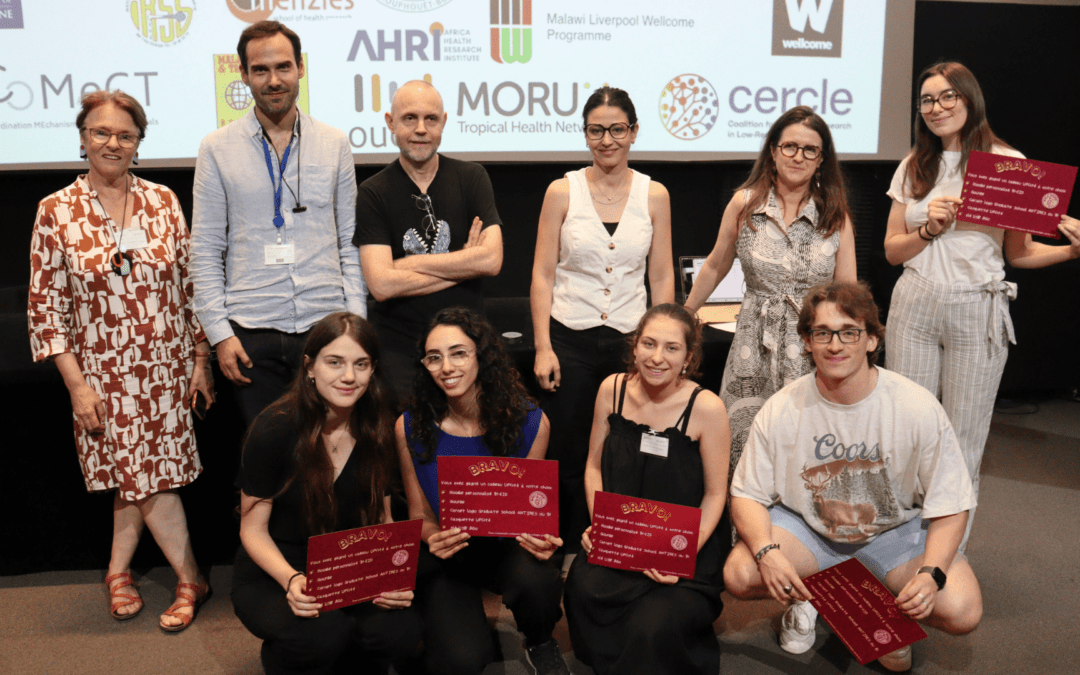
AMR Horizons 2026: Three Days to Rethink Antimicrobial Resistance
From 8 to 10 July 2026, the Graduate Schools Antimicrobial Resistance and One Health – Emerging Infectious Diseases brought together researchers, healthcare professionals, representatives from industry, and students in Paris to address a shared challenge:...
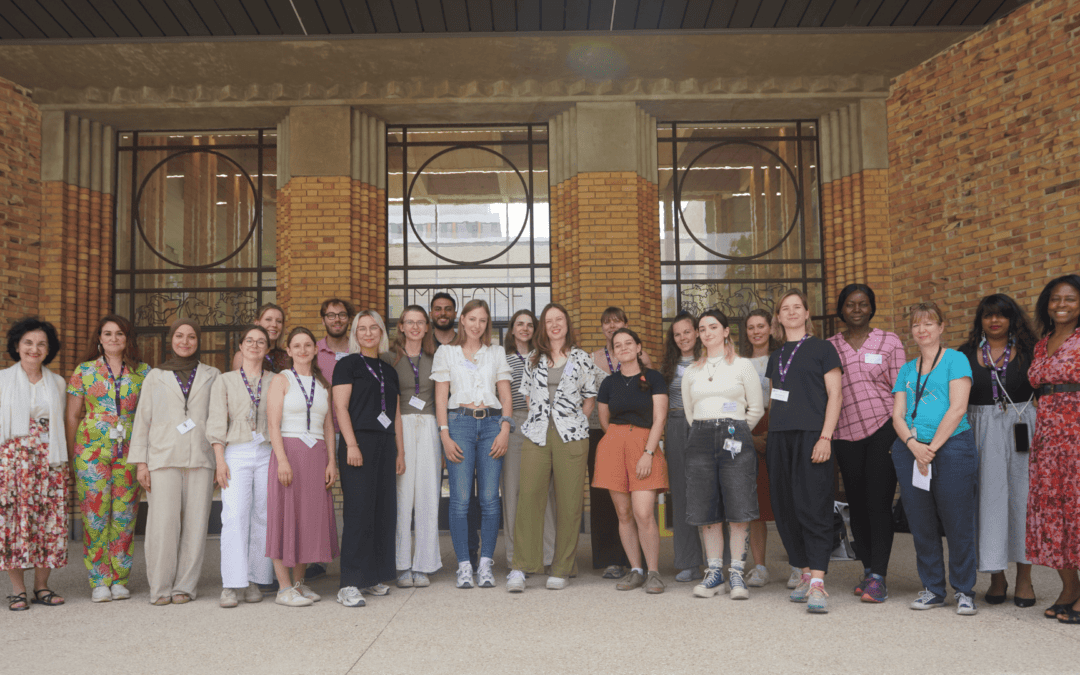
French-German Summer School 2026: A Scientific and Intercultural Gathering to Explore Re-emerging Diseases
From June 29 to July 3, 2026, the École Nationale Vétérinaire d'Alfort (ENVA) and the Graduate School One Health–Emerging Infectious Diseases (1H-EID) of Université Paris Cité (UPCité) hosted the 2026 edition of the French-German Summer School. Over a week rich in...
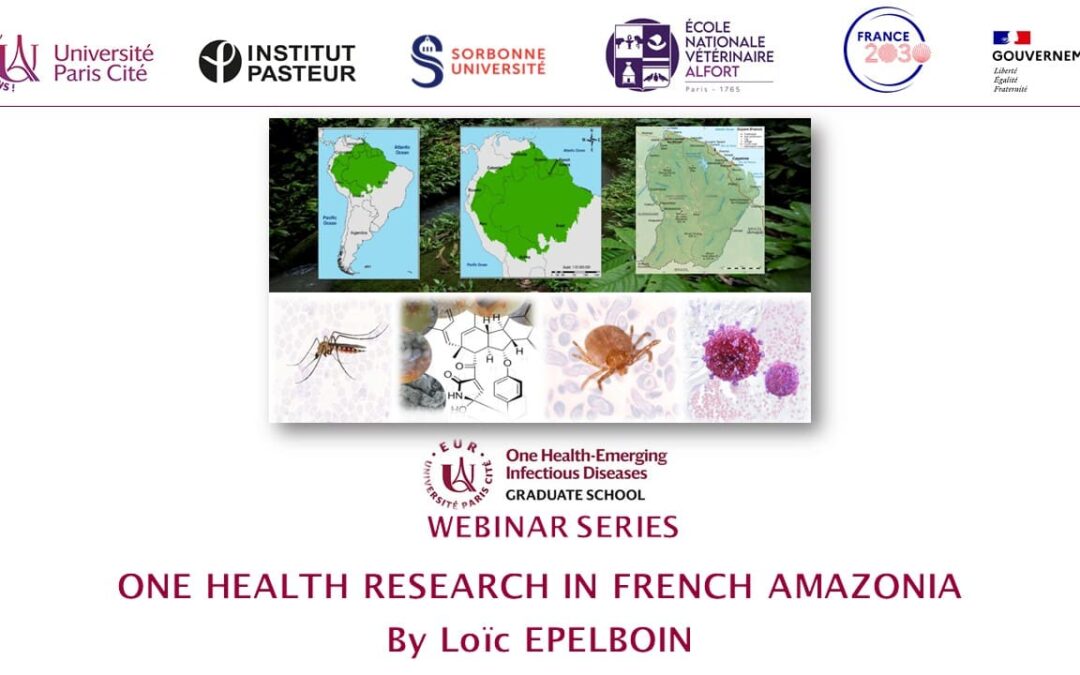
The Amazon, Viruses, and Vampires: what a year of 1H-EID webinars revealed to the world.
1,500 people connected from 30 countries. 14 sessions. Two languages. One question: how do we live with emerging diseases? As part of its pedagogical and digital innovation efforts to raise awareness among the widest possible audience, the Graduate School One Health...