
Master

For more information about the Master Molecular and Cellular Biology – Emerging Infectious Diseases course, please contact:
Jean-Emmanuel HUGONNET
India LECLERCQ
© Camille Perrin
Apply to the Master 2 – Emerging Infectious Diseases, 2026/2027
Pre-registrations for the 2026/2027 Master 2 BMC – Emerging Infectious Diseases are open until May 22, 2026.
To apply, please visit ecandidat.
A presentation webinar is available as a replay, at the bottom of the page.
First-year curriculum
In the first year of the Master’s program (M1), the Emerging Infectious Diseases (EID) track builds on existing courses in molecular biology, cell biology, bioinformatics, virology and microbiology, with the introduction of new modules in computational biology, ecology and One Health.
Internships in emerging infectious diseases take place in the laboratories affiliated with the Graduate School.
For students in health-related fields, Research Initiation Programs (PIR) are also available in infectious diseases and public health, such as “Resistance and adaptation of microorganisms to anti-infective agents”, “Evolution: key mechanisms — biological and medical approaches”, and a new track on “Emerging Infectious Diseases”.
Second-year curriculum
In the second year of the Master’s programme (M2), students follow a common core curriculum comprising the following courses: Host-Emerging Pathogens Interactions, Social Sciences Perspectives on One Health and Emerging Infectious Diseases, An Interdisciplinary Introduction, and Maladies infectieuses animales émergentes et zoonoses (Emerging Animal Infectious Diseases and Zoonoses).
Students then choose one of two majors:
- Méthodes en épidémiologie : principes, méthodes et analyses de données (Epidemiological Methods: Principles, Methods and Data Analysis)
- From the Field and Epidemiology and Biostatistics: Critically Receiving Scientific Communications.
The programme is complemented by one of two minors:
- Environment, Ecosystems and Biodiversity.
- Genomics and Evolutionary Dynamics.
A range of elective modules is also available, allowing students to explore specific topics in greater depth, including emerging pathogens, antimicrobial resistance, the One Health–One Planet approach, and advanced epidemiological tools and methods.
See the full list of courses here.
Key strengths of our M2
- Highly personalised internships, drawing on the diverse range of leading research laboratories affiliated with the Graduate School.
- Interdisciplinary approach
- Outgoing mobility grants for international internships
- Diverse student backgrounds
- Scientific events programme (webinars, conferences, afterworks…)
Did you miss our information webinar? Watch the replay!
Read more
The MIcrobeS Doctoral School: a strategic framework for doctoral training in microbiology and infectious diseases at Université Paris Cité
At the start of the 2026 academic year, the Microorganisms and Infection Doctoral School (MIcrobeS) officially opened at Université Paris Cité. This doctoral school, at the heart of today’s major scientific and health challenges, aims to train a new generation of...
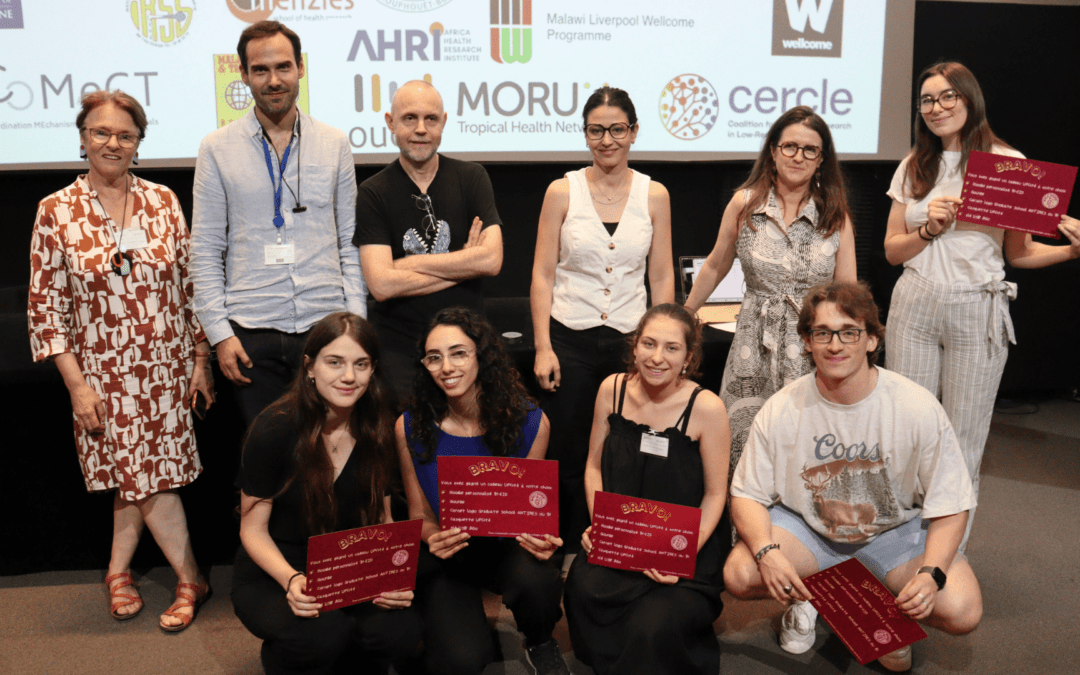
AMR Horizons 2026: Three Days to Rethink Antimicrobial Resistance
From 8 to 10 July 2026, the Graduate Schools Antimicrobial Resistance and One Health – Emerging Infectious Diseases brought together researchers, healthcare professionals, representatives from industry, and students in Paris to address a shared challenge:...
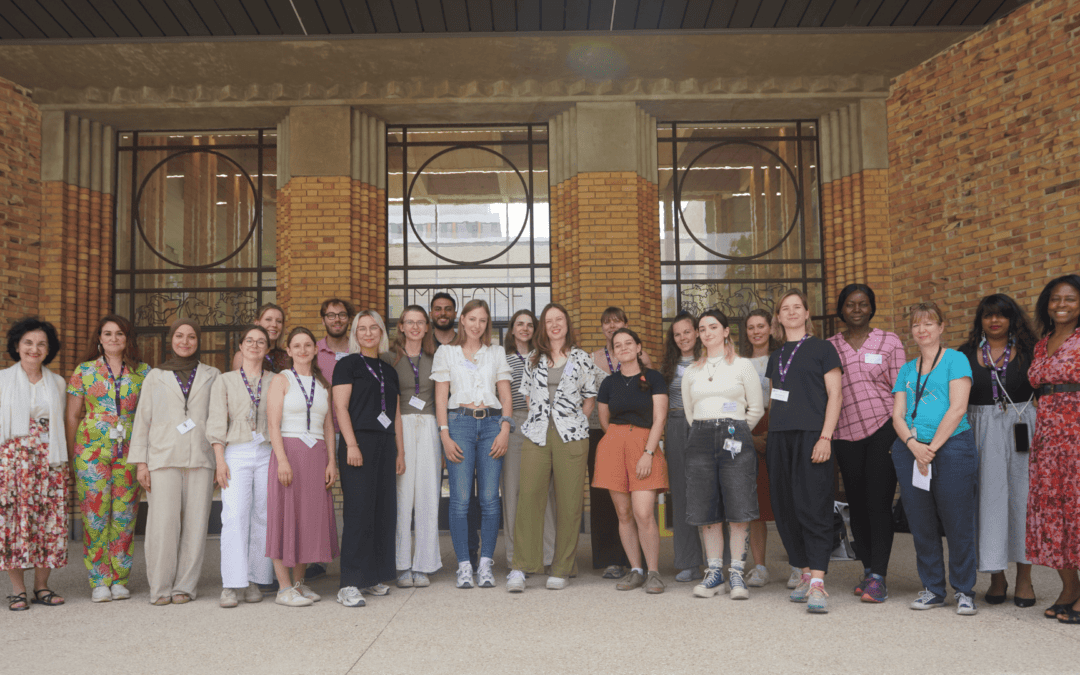
French-German Summer School 2026: A Scientific and Intercultural Gathering to Explore Re-emerging Diseases
From June 29 to July 3, 2026, the École Nationale Vétérinaire d'Alfort (ENVA) and the Graduate School One Health–Emerging Infectious Diseases (1H-EID) of Université Paris Cité (UPCité) hosted the 2026 edition of the French-German Summer School. Over a week rich in...
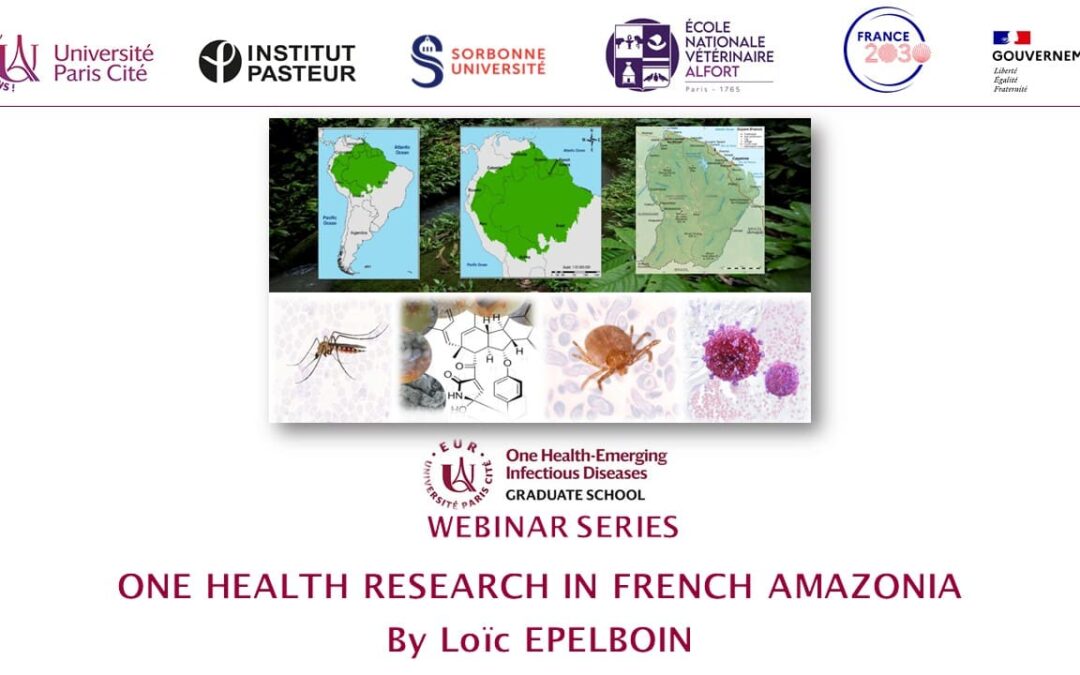
The Amazon, Viruses, and Vampires: what a year of 1H-EID webinars revealed to the world.
1,500 people connected from 30 countries. 14 sessions. Two languages. One question: how do we live with emerging diseases? As part of its pedagogical and digital innovation efforts to raise awareness among the widest possible audience, the Graduate School One Health...